





Manufacturing Process: From Design to Office Workstation
- From Concept to Cubicle: Turning Ideas into Office Workstations
- Design and User Research for Office Workstations
- Material Selection and Sustainability for Office Workstations
- Engineering, Prototyping and CAD for Office Workstations
- Manufacturing Processes: From Cutting to Assembly for Office Workstations
- Quality Control and Certifications for Office Workstations
- Packaging, Logistics and After-Sales for Office Workstations
- Cost Drivers and Lead Times for Office Workstations
- Scalability and Production Capacity for Office Workstations
- MEI YI Furniture: Custom Furniture Manufacturer
- How MEI YI Addresses Common Buyer Needs for Office Workstations
- Best Practices for Procurement and Partner Selection
- Frequently Asked Questions (FAQs)
- 1. How long does it take to manufacture custom office workstations?
- 2. What certifications should I look for when buying office workstations?
- 3. Are adjustable-height workstations more expensive to manufacture?
- 4. How can I ensure the workstations are sustainable?
- 5. What warranty terms are standard for office workstations?
- 6. How do manufacturers test durability of workstations?
- 7. Can I get CAD/3D design support before ordering?
- References
From Concept to Cubicle: Turning Ideas into Office Workstations
Office workstations are more than desks and partitions — they are products engineered to support productivity, comfort and company branding. This article walks through the full manufacturing process for office workstations: design and user research, material selection, CAD and prototyping, production technologies, quality control, certification, logistics and after-sales. Each section focuses on decisions that affect ergonomics, cost, sustainability and long-term reliability so product managers, purchasers and facility planners can make informed choices.
Design and User Research for Office Workstations
Design begins with the people who will use the furniture. Effective office workstation design addresses ergonomics, workflow, acoustic needs, cable management and aesthetic alignment with corporate identity. Primary research methods include user interviews, time-and-motion studies, and surveying facility managers about layout density and maintenance constraints.
Key ergonomic standards and guidance to follow when designing office workstations:
- BIFMA (Business and Institutional Furniture Manufacturers Association) standards for performance and safety — relevant for durability and structural testing.
- Ergonomic guidelines for chair and desk heights — e.g., adjustable-height desks to accommodate different anthropometrics.
- Acoustic recommendations for open-plan workstations (sound-absorbing panels, layout strategies).
Design output should include user personas, space planning scenarios, CAD drawings (2D and 3D), and modular configurations that allow for easy reconfiguration as organizations grow.
Material Selection and Sustainability for Office Workstations
Material choice directly impacts cost, sustainability, durability and finish quality. Typical materials for office workstations include engineered wood (MDF/HDF), solid wood, plywood, steel, aluminum, laminates, and textiles for panels.
Important material attributes to evaluate:
- Emissions and indoor air quality — E1-grade formaldehyde limits are common in international supply chains and reduce VOC risks.
- Certification — FSC for responsibly sourced wood; ISO and CE for manufacturing systems and conformity.
- Mechanical properties — bending strength, screw-holding capacity, corrosion resistance for metal frames.
Table: Common material options for office workstations
| Material | Advantages | Drawbacks | Typical Use |
|---|---|---|---|
| MDF (E1-grade) | Stable, smooth surface, cost-effective | Less moisture resistant than plywood | Tabletops, panels, veneered finishes |
| Plywood | Good strength-to-weight, better moisture resistance | More expensive than MDF | Structural panels, curved elements |
| Steel | High strength, long life, recyclable | Heavier, requires surface treatment | Frames, legs, brackets |
| Laminates & Veneers | Durable surface, wide finish options | Surface may chip, repair more complex | Worktops, privacy panels |
Sources: FSC and ISO guidelines help purchasers verify responsible sourcing and material safety (references at end).
Engineering, Prototyping and CAD for Office Workstations
After concept selection, engineering translates design intent into manufacturable components. Detailed CAD models, parts lists (BOM), injection molds or press cut patterns, and finite element analysis (FEA) for load-bearing members reduce downstream issues.
Rapid prototyping options:
- 3D-printed scale models for visual and ergonomic validation
- Full-size functional prototypes using production materials to test assembly and finish
- Pilot runs of small batches to validate fit, finish and installation workflow
Prototyping helps confirm cable management routing, grommet positions, modular bracket fit and acoustic properties. It also provides a physical sample for customer approval before committing to large production runs.
Manufacturing Processes: From Cutting to Assembly for Office Workstations
Manufacturing office workstations typically follows these core processes: material preparation (cutting and shaping), metal fabrication, surface treatment, sub-assembly, final assembly and packaging.
Common manufacturing technologies and their roles:
- CNC routing and panel saws — precision cutting of wood-based panels for consistent fit.
- Laser/CO2 cutting and press brakes — advanced yields and tight tolerances for metal parts.
- Powder coating and electroplating — durable and consistent finishes for metal frames.
- Edge-banding and lamination lines — protect edges of tabletops and provide aesthetic finishes.
Optimizing the production line layout reduces handling time and increases throughput. For example, straight-line workflows from CNC to edge-bander to assembly reduce repositioning and part damage.
Quality Control and Certifications for Office Workstations
Quality assurance should be embedded at multiple stages: incoming material inspection, in-process checks, and final product testing. Key QC checkpoints include dimensional tolerances, surface finish checks, fastener torque testing, and load/endurance tests for desks and frames.
Relevant certifications and standards:
- ISO 9001 — quality management system for consistent manufacturing processes.
- CE marking — for products sold in the European Economic Area, indicating conformity with health, safety and environmental protection standards.
- BIFMA testing — performance standards for office furniture (durability, stability, strength).
- FSC — chain-of-custody for wood materials.
Documented test reports and third-party lab certifications increase purchaser confidence, reduce procurement risk, and are often prerequisites for large corporate and public-sector contracts.
Packaging, Logistics and After-Sales for Office Workstations
Packaging design influences transportation cost, on-site handling and product damage rates. Flat-pack designs reduce volume and freight cost but must balance on-site assembly complexity and the risk of installation errors.
Logistics considerations include:
- Containerization and pallet optimization to maximize units per shipment.
- Protective packaging materials that minimize scratching while being recyclable.
- Clear assembly instructions, QR-linked videos and labeling to reduce installation errors.
After-sales service (warranty, spare parts, maintenance guidance) is a key differentiator. A 5-year warranty and responsive spare-parts support help facility managers extend ROI and simplify lifecycle budgeting.
Cost Drivers and Lead Times for Office Workstations
Major cost drivers include material prices (wood, metal), labor intensity, surface finishes, complexity of modular systems, and certification costs. Lead times vary: prototyping may take 4–8 weeks; tooling and pilot runs 6–12 weeks; mass production 4–12 weeks depending on order size and seasonality.
Table: Typical timeline & cost influence
| Phase | Typical Duration | Cost Influence |
|---|---|---|
| Design & Research | 2–6 weeks | Low–Medium (depends on consultancy) |
| Prototyping | 4–8 weeks | Medium (materials and labor for samples) |
| Tooling & Pilot | 6–12 weeks | High (one-time tooling costs) |
| Mass Production & QA | 4–12 weeks | Variable (volume-driven unit cost reduction) |
| Shipping & Installation | 2–6 weeks | Medium (logistics and on-site labor) |
Scalability and Production Capacity for Office Workstations
Scaling from prototype to 10,000+ units/year requires robust supply chains, manufacturing capacity and quality management. Typical scaling challenges include supplier lead times for specialty components, maintaining finish consistency, and managing inventory across variants.
Best practices for scalability:
- Standardize modular components to reduce SKUs and simplify inventory.
- Use vendor-managed inventory (VMI) for high-volume consumables like screws and connectors.
- Implement poka-yoke (error-proofing) in assembly to maintain consistent quality at speed.
MEI YI Furniture: Custom Furniture Manufacturer
MEI YI Furniture is a custom furniture manufacturer with 16+ years of experience designing and producing High Quality furniture for offices, hotels, schools, healthcare and public spaces worldwide. MEI YI offers end-to-end solutions covering design, manufacture, customization and after-sales support, which is particularly valuable for complex office workstation projects that require both aesthetic and performance alignment.
Main products and scope:
- Office furniture — workstations, executive desks, meeting tables, storage solutions.
- Hotel furniture — guestroom and public-area furnishings.
- School furniture — durable classroom desks, lab benches and seating.
Core capabilities and production highlights:
- 25,000 m² factory with 100+ professionals and capacity of 20,000+ units/year.
- ISO / CE / FSC-certified manufacturing with E1-grade eco-friendly materials.
- 10+ advanced production lines enabling integrated steel and wood production.
Key strengths that differentiate MEI YI:
- Full quality control — rigorous inspections from raw materials to finished products reduce warranty claims and ensure consistent performance.
- Factory-direct value — OEM/ODM available, including a 5-year warranty and free CAD/3D design services to accelerate project approval.
- Global experience — a multilingual team capable of managing international projects from initial design through to delivery and installation.
MEI YI’s combination of certified materials, in-house production lines and design services positions the company to deliver tailored office workstations that meet ergonomic standards, budget constraints and delivery timelines for corporate and public-sector clients.
How MEI YI Addresses Common Buyer Needs for Office Workstations
Buyers commonly prioritize ergonomics, cost predictability, sustainability and lead times. MEI YI addresses these by offering E1-grade materials and FSC options, transparent manufacturing processes with ISO controls, and the ability to deliver both small bespoke orders and scaled production for large rollouts.
Best Practices for Procurement and Partner Selection
When selecting a manufacturer for office workstations, evaluate these criteria:
- Certifications (ISO, CE, FSC) and third-party test reports.
- Sample review — request full-size working samples to validate ergonomics and finishes.
- Warranty and spare parts policy — understand lead times for replacements.
- Project references — review similar-scale projects and ask for client contacts.
Clear contracts that specify material grades, surface finish standards, inspection checkpoints, delivery milestones and penalties for late delivery reduce disputes and keep projects on schedule.
Frequently Asked Questions (FAQs)
1. How long does it take to manufacture custom office workstations?
Lead time depends on complexity and volume. Typical timelines: 6–12 weeks for small-to-medium orders after design approval; 12+ weeks for large-scale or highly customized projects. Prototyping and tooling add additional time upfront.
2. What certifications should I look for when buying office workstations?
Look for ISO 9001 (quality management), CE marking (for EU markets), BIFMA test reports (performance benchmarks), and FSC (responsible wood sourcing). E1 formaldehyde emission rating is important for indoor air quality.
3. Are adjustable-height workstations more expensive to manufacture?
Yes, electrically adjustable desks include motors, control electronics and reinforced frames, which increase component and assembly costs. However, their health and productivity benefits often justify the investment in commercial settings.
4. How can I ensure the workstations are sustainable?
Choose E1-grade boards, FSC-certified wood, recyclable metals, and low-VOC finishes. Request chain-of-custody documentation and environmental product declarations (EPDs) where available.
5. What warranty terms are standard for office workstations?
Warranties typically range from 1 to 5 years depending on the manufacturer and product class. Look for clear coverage of structural components, surface finishes and mechanisms. MEI YI, for instance, offers a 5-year warranty on many products.
6. How do manufacturers test durability of workstations?
Durability tests include static load tests, repetitive impact tests, hinge and mechanism cycle testing, and abrasion/resistance tests for surfaces. Third-party labs or BIFMA-aligned testing provide independent verification.
7. Can I get CAD/3D design support before ordering?
Many manufacturers offer free or paid CAD/3D services to help fit office workstations into floorplans and simulate finishes. MEI YI provides free CAD/3D design support to facilitate approvals and avoid costly rework.
Contact us for consultation or to view sample office workstation products: request a quote, arrange a virtual sample review, or schedule a factory visit to see production lines and quality checks in action.
References
- BIFMA — Standards and testing guidance. https://www.bifma.org/ (accessed 2025-12-20)
- International Organization for Standardization — ISO 9001. https://www.iso.org/iso-9001-quality-management. (accessed 2025-12-20)
- Forest Stewardship Council (FSC) — Certification information. https://fsc.org/ (accessed 2025-12-20)
- BIFMA G1 Ergonomics Guideline for Furniture Systems and Workstations. https://www.bifma.org (accessed 2025-12-20)
- Statista — Global office furniture market size (example market data). https://www.statista.com/ (accessed 2025-12-20)
- Wikipedia — Office furniture overview. https://en.wikipedia.org/wiki/Office_furniture (accessed 2025-12-20)
For project inquiries, custom specifications or to request CAD files and samples, contact MEI YI Furniture’s sales team for a consultation and product catalogue.
Custom furnitures offical tables Manufacturers and Suppliers in us
Personalization Options: Inlays, Hardware, and Engraving
Integrating Cable Management into Executive Desks
Logistics and Installation Planning for Hotel Furniture Projects
Service
ls there cheap shipping cost to import to our country?
For small order,express will be best. And for bulk order,sea ship way is best but take much time; For urgent orders,we suggest via air to airport plus our ship partner send to your door. When we calculate the freight for you, we will choose the cheapest,safest express company. lt is the freight company that asks us to pay, so we can not make it cheaper. lf you have your own agent in China, we can send the package to your agent.
Why choose us?
A. Business Type: Furniture Manufacture,Production and export trade experience: Over 15 years Factory area:10000 + square meters Member:>100 staffs Design Team: Minimum 20 pax to organize
B.Customization: Welcome to OEM and ODM or Project.
C.Delivery:15days for 20GP, 25days for 40HQ.
D. Testing center is available in our factory, and regularly through national authoritative organization authoritative authentication, ensure that each product is qualified. E.Competitive price from factory directly.
What's your products range?
1.Whether you need office furniture, home furniture, hotel furniture, school furniture.or special custom furniture products, we can meet your requirements.
2.-Products including office table, office chair, office filing cabinet, office workstation,Office sofa, office reception ,office conference room and so on, Simple Leisure Sets etc.
Can you handle small orders ?
Of course, in order to support clients' business, We also take small orders.

MEIYI Hotel Full-House Custom Furniture Solutions
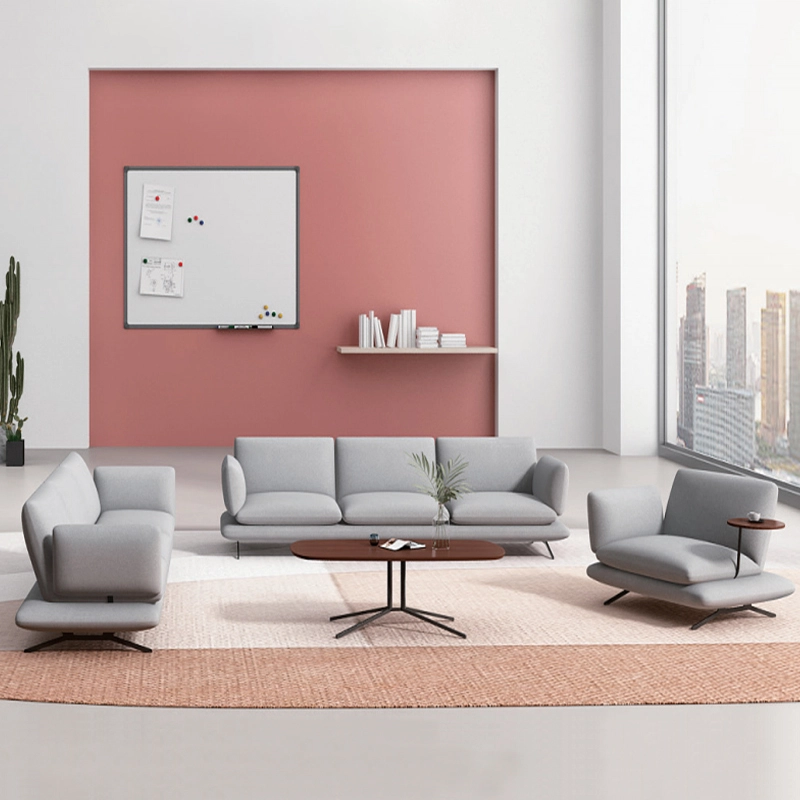
Modern Office Waiting Sofa Set Comfortable Lounge Seating
Customizable sofas, featuring a teddy fabric cover that's durable and stain-resistant. Customizable sizes are also available. This sofa features a sturdy frame and high-quality materials, making it suitable for everyday use. Its versatile design makes it ideal for living rooms, apartments, lounge areas, and even cozy reading nooks. It's more than just a sofa; it's a statement piece for stylish and intelligent living.

MEI YI Furniture × Hotel: Custom Furniture Empowers the Quality Upgrade of a National Hotel Brand
MEI YI Furniture partners with Hotel to deliver custom hotel furniture that combines high-efficiency and durability. This collaboration elevates the quality of a national hotel brand, showcasing MEI YI’s expertise in crafting tailored, long-lasting solutions for High Quality hospitality spaces.
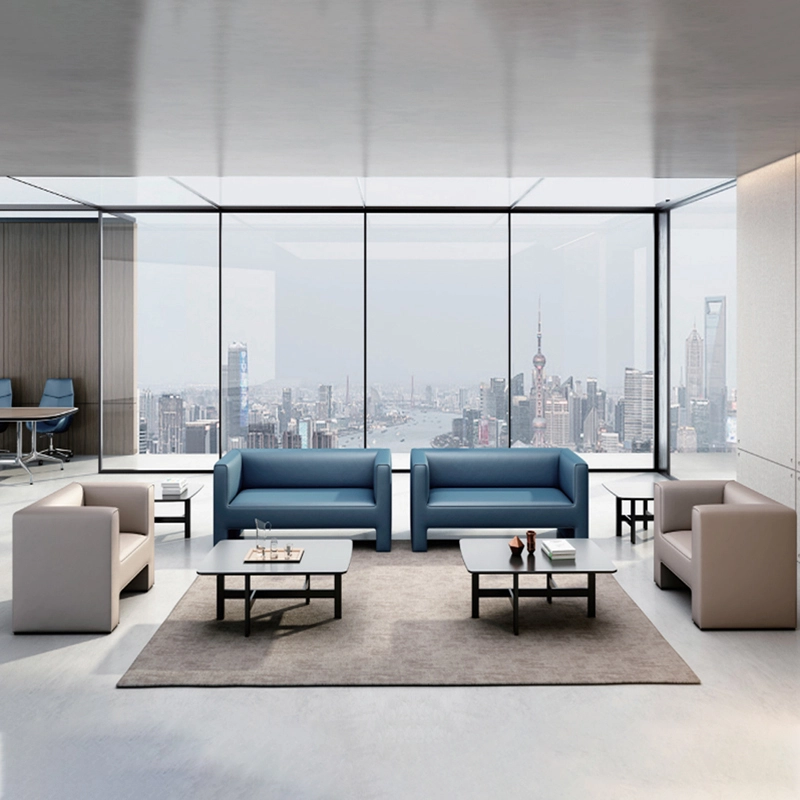
High Quality Wholesale Custom Furniture Waiting Sofa Modern Leisure Sofa
Customizable sofas, featuring a artificial leather cover that's durable and stain-resistant. Customizable sizes are also available. This sofa features a sturdy frame and high-quality materials, making it suitable for everyday use. Its versatile design makes it ideal for living rooms, apartments, lounge areas, and even cozy reading nooks. It's more than just a sofa; it's a statement piece for stylish and intelligent living.
Want to get more of our articles?
Contact one of our sales representatives or fill out this form.
MEI YI Furniture provides a one-stop service for the design, manufacturing, and customization of office, hotel, and school furniture.
Contact: Asya
Email: asya@myofficefurniture.com.cn
WhatsApp: +86 134 2216 1319
Address: No. 25, Nan Street, Jinpan, Zhongluotan Town, Baiyun District, Guangzhou, China.
Whatsapp: +8613422161319
Fackbook
Instagram
YouTube