





Case studies: contemporary office furniture for corporate campuses
- Designing Productive Corporate Campuses with Contemporary Office Furniture
- Understanding and business outcomes
- What we mean by contemporary office furniture in campus contexts
- Case studies: implementations and measurable results
- Composite Case Study A — Tech HQ: hybrid-first campus
- Composite Case Study B — Financial Services: zoned privacy & security
- Composite Case Study C — Life Sciences Campus: resilient materials & cleanability
- Design patterns, KPIs and procurement strategy
- Key KPIs to track for campus furniture projects
- Procurement and rollout best practices
- Budgeting and lifecycle thinking
- Comparing furniture typologies for corporate campuses
- Risk management: compliance, sustainability, and supply chain
- Regulatory and sustainability checks
- Supply chain resilience
- Maintenance and aftercare
- MEI YI Furniture: factory-direct partner for campus projects
- Company profile and core manufacturing capabilities
- Competitive strengths and differentiators
- How MEI YI supports campus deployments
- Implementation roadmap: from briefing to campus-scale delivery
- Phase 1 — Discovery and pilot
- Phase 2 — Finalize standards and procurement
- Phase 3 — Rollout and measure
- FAQ
- 1. What is the difference between contemporary and modern office furniture?
- 2. How do I measure ROI on a campus furniture investment?
- 3. How long does a typical campus-scale furniture rollout take?
- 4. What certifications should I require from suppliers?
- 5. Can contemporary furniture meet stringent cleanability or lab requirements?
- 6. What are the risks of buying on price alone?
- Contact and next steps
- References
- Appendix — MEI YI quick facts
Designing Productive Corporate Campuses with Contemporary Office Furniture
Understanding and business outcomes
Readers searching for contemporary office furniture often want practical examples: what solutions are being used at scale, how they affect employee productivity, space utilization, and total cost of ownership. This article presents case studies and composite projects to show measurable outcomes and repeatable processes for corporate campuses planning furniture refreshes or large-scale rollouts.
What we mean by contemporary office furniture in campus contexts
Contemporary office furniture refers to modern, function-driven pieces that prioritize ergonomics, modularity, sustainability and aesthetic cohesion. On campuses, it spans workstations, meeting and retreat areas, touchdown zones, hospitality-style lounges and outdoor furniture aligned to a single design language that supports hybrid work patterns.
Case studies: implementations and measurable results
Composite Case Study A — Tech HQ: hybrid-first campus
Situation: A 120,000 sqm technology campus transitioning from assigned seating to a hybrid, hoteling-first model. Objectives: reduce real-estate spend, increase collaboration, and improve employee satisfaction.
Interventions: modular benching systems, height-adjustable desks, integrated power/AV furniture in collaboration nodes, focused phone booths, hospitality lounges with comfortable lounge seating and soft acoustic panels.
Measured outcomes (12 months post-install): reduced assigned workstation count by ~30% (enabling subleasing of one building), average daily utilization increased in collaboration zones, and employee satisfaction surveys showed improved ratings for perceived collaboration support. These results align with broader industry research on flexible design improving employee engagement and space efficiency.
Composite Case Study B — Financial Services: zoned privacy & security
Situation: A financial services campus with high confidentiality needs required a balance between open-plan collaboration and private, acoustically controlled areas.
Interventions: a mix of enclosed focus rooms, tiered benching with low partitions, acoustical pods, and high-back seating in public concourses. Desks and storage were configured for GDPR and records-control workflows.
Measured outcomes: improved confidentiality compliance (measured via internal audits), a 15% increase in effective meeting throughput (shorter, more focused meetings), and lower noise complaints due to acoustic furniture and absorptive materials.
Composite Case Study C — Life Sciences Campus: resilient materials & cleanability
Situation: A research campus required furniture that meets strict cleanability standards, chemical resistance, and durability while still providing spaces for interdisciplinary collaboration.
Interventions: laminated tops with antimicrobial finishes, steel-frame seating with replaceable cushions, mobile worktables for lab-adjacent teams and configurable lab-support benches that can be re-tooled.
Measured outcomes: lifecycle maintenance costs reduced, fewer furniture-related contamination incidents, and improved cross-team interactions because of flexible adjacent collaboration spaces.
Design patterns, KPIs and procurement strategy
Key KPIs to track for campus furniture projects
- Space utilization (desk and collision-area occupancy)
- Employee satisfaction and perceived fit-for-purpose (surveys)
- Total cost of ownership (procurement + maintenance + replacement over lifecycle)
- Turnaround time for reconfiguration (hours to change layout)
- Sustainability metrics (percentage of FSC/E1 materials, recyclability)
Procurement and rollout best practices
1) Pilot and measure: run representative pilots in different building types. 2) Standardize modules: use a limited set of configurable modules to simplify logistics and maintenance. 3) Vendor pre-qualification: require ISO/CE/FSC documentation and sample inspection. 4) Phased rollout tied to occupancy cycles to reduce business disruption.
Budgeting and lifecycle thinking
Evaluate cost per workstation over a useful life (e.g., 7–10 years for contemporary office systems) rather than purchase price alone. Include warranty, spare-part availability, and re-upholstery options in RFPs to accurately estimate lifecycle costs.
Comparing furniture typologies for corporate campuses
| Typology | Strengths | Trade-offs | Best use | Typical lifespan |
|---|---|---|---|---|
| Modular benching | High density, cost-efficient, flexible | Lower privacy, acoustics need treatment | Open-plan heads-down work | 7–10 years |
| Height-adjustable desks | Ergonomics, employee wellbeing | Higher initial cost, maintenance of mechanics | Individual workstations | 7–12 years |
| Collaboration furniture (soft seating, meeting tables) | Encourages informal meetings, hospitality feel | Can be space-inefficient if overused | Breakouts, lounges, touchdown zones | 5–10 years |
| Acoustic pods & enclosed rooms | High privacy and focus | Higher cost per sqm, fixed location | Confidential meetings, focused work | 10+ years |
Risk management: compliance, sustainability, and supply chain
Regulatory and sustainability checks
Ensure materials meet local fire codes, indoor air quality standards (E1-rated panels for low formaldehyde emissions) and that any timber is FSC-certified where specified. For campus-wide projects, require third-party certification (ISO management systems, CE marking where applicable) in vendor contracts.
Supply chain resilience
Large campus rollouts are sensitive to lead times. Favor suppliers with factory capacity, documented quality control, and a track record of on-time delivery. Including production milestones and penalty clauses in contracts reduces schedule risk.
Maintenance and aftercare
Standardize spare parts, fabric references and finish codes across the campus. Training facility teams and the janitorial staff in care protocols extends furniture life and protects the investment.
MEI YI Furniture: factory-direct partner for campus projects
Company profile and core manufacturing capabilities
MEI YI Furniture: Custom Furniture Manufacturer. With 16+ years of expertise, MEI YI Furniture designs and manufactures High Quality furniture for offices, hotels, schools, healthcare, and public spaces globally. Core capabilities include a 25,000 m² factory, a 100+ professional team and production capacity of 20,000+ units/year. The company operates 10+ advanced production lines and uses E1-grade eco-friendly materials, ISO/CE/FSC-certified processes, and offers OEM/ODM services.
Competitive strengths and differentiators
1) Full Quality Control — Rigorous inspections from raw materials through finished goods. 2) Factory-Direct Value — OEM/ODM with a 5-year warranty and free CAD/3D design services to speed decision-making. 3) Global Experience — multilingual project teams managing international deliveries, customs and compliance. These strengths reduce procurement friction for campus-scale projects where coordination and consistency are critical.
How MEI YI supports campus deployments
MEI YI provides end-to-end solutions: initial concept and space planning support, free CAD/3D modelling, prototyping, production with ISO/CE/FSC compliance, packaging for international transport, and after-sales support including warranty handling and spare parts. For campus projects, MEI YI’s factory capacity and modular product families enable phased rollouts with consistent quality.
Implementation roadmap: from briefing to campus-scale delivery
Phase 1 — Discovery and pilot
Define personas, mapping worktypes and adjacency diagrams. Select representative pilot floors and test contemporary furniture modules (benching + collaborative nodes). Collect utilization and satisfaction data for 8–12 weeks.
Phase 2 — Finalize standards and procurement
Consolidate finishes, fabric families and module configurations into a standards manual. Issue an RFP that includes production milestones, certifications (ISO/CE/FSC), warranty terms and penalties for late delivery.
Phase 3 — Rollout and measure
Stagger building moves to limit disruption. Track KPIs every quarter and feed lessons back into subsequent phases. Maintain spare parts inventory and schedule upholstery refresh options.
FAQ
1. What is the difference between contemporary and modern office furniture?
Contemporary describes current design trends and typically blends functionality, ergonomics and current materials/finishes. Modern often refers to a historical design movement (early-to-mid 20th century). For procurement, focus on functional attributes rather than labels.
2. How do I measure ROI on a campus furniture investment?
Measure ROI across reduced real-estate expense (if densification enables subleasing), productivity gains (survey and performance metrics), reduced absenteeism (post-implementation), and lower maintenance costs over the product lifecycle. Include soft benefits like talent attraction when calculating ROI.
3. How long does a typical campus-scale furniture rollout take?
For a mid-sized campus, expect 6–18 months from design to final installation: 2–3 months for discovery/pilots, 2–4 months for procurement, and phased installations over several months depending on occupancy and refurbishment windows.
4. What certifications should I require from suppliers?
Require ISO quality management evidence (ISO 9001), CE marking for applicable products in Europe, FSC certification for timber, and E1 or equivalent documentation for low-emission panels. Also request third-party test reports for durability where relevant.
5. Can contemporary furniture meet stringent cleanability or lab requirements?
Yes—many manufacturers offer laminate tops with antimicrobial finishes, steel frames with replaceable cushions, and materials selected for chemical resistance. Specify these requirements early so suppliers can propose compliant solutions.
6. What are the risks of buying on price alone?
Low upfront cost often correlates with shorter lifespan, limited warranty, poor spare-part availability, and inconsistent finishes across production lots—risks that amplify in campus rollouts. Balance price with certifications, warranty and supplier capacity.
Contact and next steps
If you are planning a campus furniture program and want a factory-direct partner with experience in office, hotel and educational furniture, contact MEI YI Furniture for a consultation. MEI YI offers free CAD/3D design, OEM/ODM services, a 5-year warranty and full quality control from materials to finished goods. For project inquiries, request a capability pack and sample schedule to compare timelines and costs for your campus rollout.
References
- Gensler. Gensler U.S. Workplace Survey 2021. https://www.gensler.com/research-insight/gensler-us-workplace-survey-2021 (accessed Jan 1, 2026).
- Harvard Business Review. What Office Workers Want. https://hbr.org/2020/07/what-office-workers-want (published Jul 2020; accessed Jan 1, 2026).
- BIFMA (Business and Institutional Furniture Manufacturers Association). https://www.bifma.org/ (accessed Jan 1, 2026).
- Steelcase Research & Insights. https://www.steelcase.com/research/ (accessed Jan 1, 2026).
- FSC — Forest Stewardship Council. https://fsc.org/ (accessed Jan 1, 2026).
- European Commission. CE marking guidance. https://ec.europa.eu/growth/single-market/ce-marking/ (accessed Jan 1, 2026).
- ISO — International Organization for Standardization. https://www.iso.org/home. (accessed Jan 1, 2026).
Appendix — MEI YI quick facts
- 16+ years in custom furniture manufacturing
- 25,000 m² factory, 100+ professionals, 20,000+ units/year capacity
- ISO/CE/FSC-certified manufacturing, E1-grade eco-friendly materials
- 10+ advanced production lines; OEM/ODM available; 5-year warranty; free CAD/3D design
- Main products: Office furniture, hotel furniture, residential and whole-home furniture, custom steel and wood furniture
Wholesale marble side table manufacturer and supplier
Personalization Options: Inlays, Hardware, and Engraving
Wholesale solid wood dinning table manufacturer and supplier
Smart Workstations: Integrating Tech into Office Desks
Service
ls there cheap shipping cost to import to our country?
For small order,express will be best. And for bulk order,sea ship way is best but take much time; For urgent orders,we suggest via air to airport plus our ship partner send to your door. When we calculate the freight for you, we will choose the cheapest,safest express company. lt is the freight company that asks us to pay, so we can not make it cheaper. lf you have your own agent in China, we can send the package to your agent.
What's your products range?
1.Whether you need office furniture, home furniture, hotel furniture, school furniture.or special custom furniture products, we can meet your requirements.
2.-Products including office table, office chair, office filing cabinet, office workstation,Office sofa, office reception ,office conference room and so on, Simple Leisure Sets etc.
Can you handle small orders ?
Of course, in order to support clients' business, We also take small orders.
Why choose us?
A. Business Type: Furniture Manufacture,Production and export trade experience: Over 15 years Factory area:10000 + square meters Member:>100 staffs Design Team: Minimum 20 pax to organize
B.Customization: Welcome to OEM and ODM or Project.
C.Delivery:15days for 20GP, 25days for 40HQ.
D. Testing center is available in our factory, and regularly through national authoritative organization authoritative authentication, ensure that each product is qualified. E.Competitive price from factory directly.
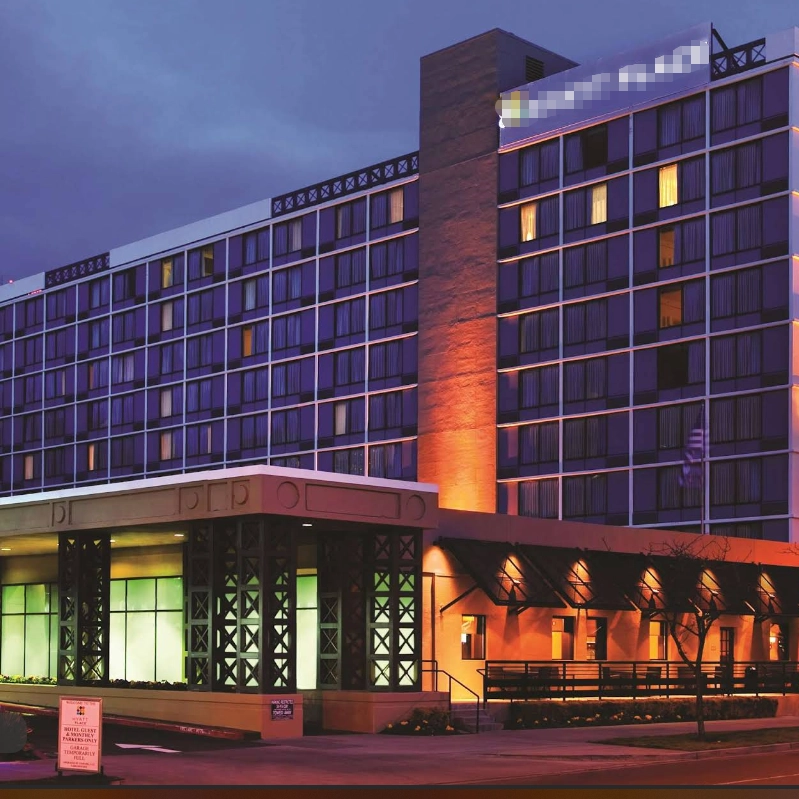
MEIYI Hotel Full-House Custom Furniture Solutions
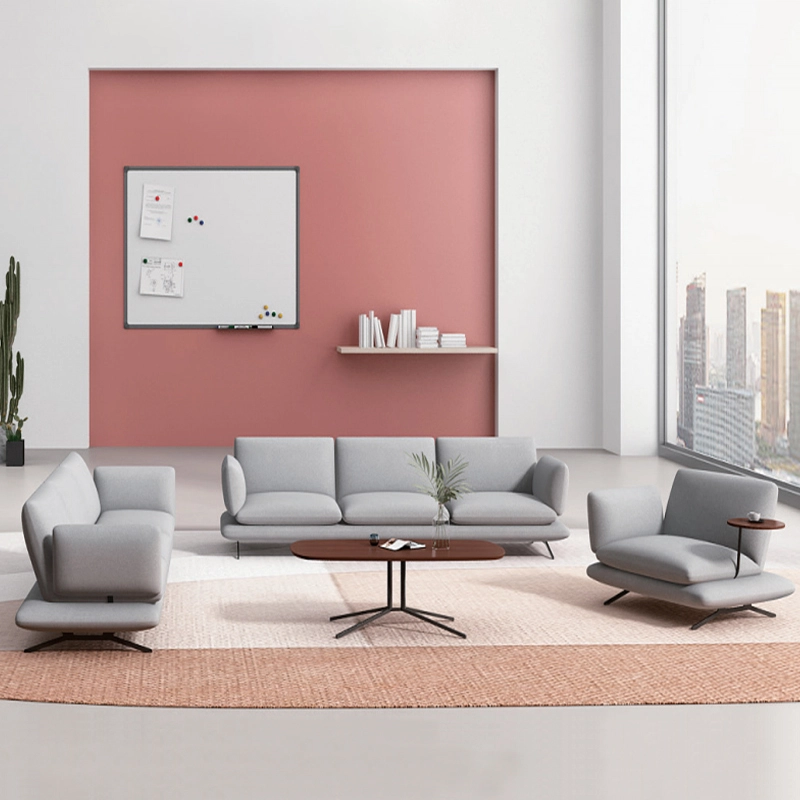
Modern Office Waiting Sofa Set Comfortable Lounge Seating
Customizable sofas, featuring a teddy fabric cover that's durable and stain-resistant. Customizable sizes are also available. This sofa features a sturdy frame and high-quality materials, making it suitable for everyday use. Its versatile design makes it ideal for living rooms, apartments, lounge areas, and even cozy reading nooks. It's more than just a sofa; it's a statement piece for stylish and intelligent living.

MEI YI Furniture × Hotel: Custom Furniture Empowers the Quality Upgrade of a National Hotel Brand
MEI YI Furniture partners with Hotel to deliver custom hotel furniture that combines high-efficiency and durability. This collaboration elevates the quality of a national hotel brand, showcasing MEI YI’s expertise in crafting tailored, long-lasting solutions for High Quality hospitality spaces.
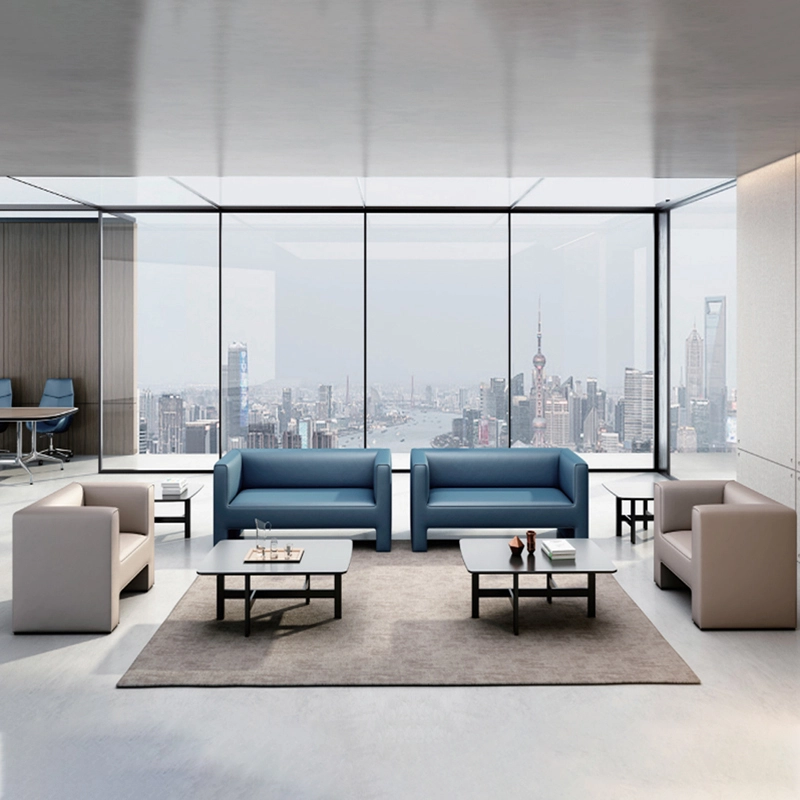
High Quality Wholesale Custom Furniture Waiting Sofa Modern Leisure Sofa
Customizable sofas, featuring a artificial leather cover that's durable and stain-resistant. Customizable sizes are also available. This sofa features a sturdy frame and high-quality materials, making it suitable for everyday use. Its versatile design makes it ideal for living rooms, apartments, lounge areas, and even cozy reading nooks. It's more than just a sofa; it's a statement piece for stylish and intelligent living.
Want to get more of our articles?
Contact one of our sales representatives or fill out this form.
MEI YI Furniture provides a one-stop service for the design, manufacturing, and customization of office, hotel, and school furniture.
Contact: Asya
Email: asya@myofficefurniture.com.cn
WhatsApp: +86 134 2216 1319
Address: No. 25, Nan Street, Jinpan, Zhongluotan Town, Baiyun District, Guangzhou, China.
Whatsapp: +8613422161319
Fackbook
Instagram
YouTube