





Modular Office Furniture Trends for Flexible Workspaces

Explore the latest modular office furniture trends that enable flexible workspaces, enhance collaboration, and support hybrid office layouts in modern organizations.
- Modular Office Furniture Trends for Flexible Workspaces
- 1. Rise of Activity-Based Workspaces
- 2. Flexible Desk Systems
- 3. Collaborative Pod and Bench Layouts
- 4. Integration of Technology
- 5. Sustainability and Eco-Friendly Materials
- 6. Personalization and Branding
- 7. Ergonomic Adaptability
- 8. Future-Proofing Office Spaces
- Conclusion
- FAQ
Modular Office Furniture Trends for Flexible Workspaces
Modern workplaces are evolving rapidly, shifting from static, assigned desks to flexible, activity-based office environments. The demand for adaptability, collaboration, and efficiency has driven the rise of modular office furniture—a solution designed to transform traditional office spaces into dynamic, multifunctional work environments.
1. Rise of Activity-Based Workspaces
Activity-based working (ABW) is reshaping office layouts. In ABW environments:
-
Employees choose workstations based on tasks
-
Furniture needs to be reconfigurable
-
Space is optimized for collaboration and focus
Modular desks, seating, and storage allow offices to support a variety of work modes—quiet focus, team collaboration, or client meetings—without permanent construction.
2. Flexible Desk Systems
Modern modular desks offer:
-
Adjustable heights (sit-stand desks)
-
Movable partitions for privacy
-
Integrated storage and cable management
These systems allow teams to expand or reduce workstation clusters quickly, supporting hybrid work models and fluctuating team sizes.
3. Collaborative Pod and Bench Layouts
Open-plan offices benefit from modular seating arrangements such as:
-
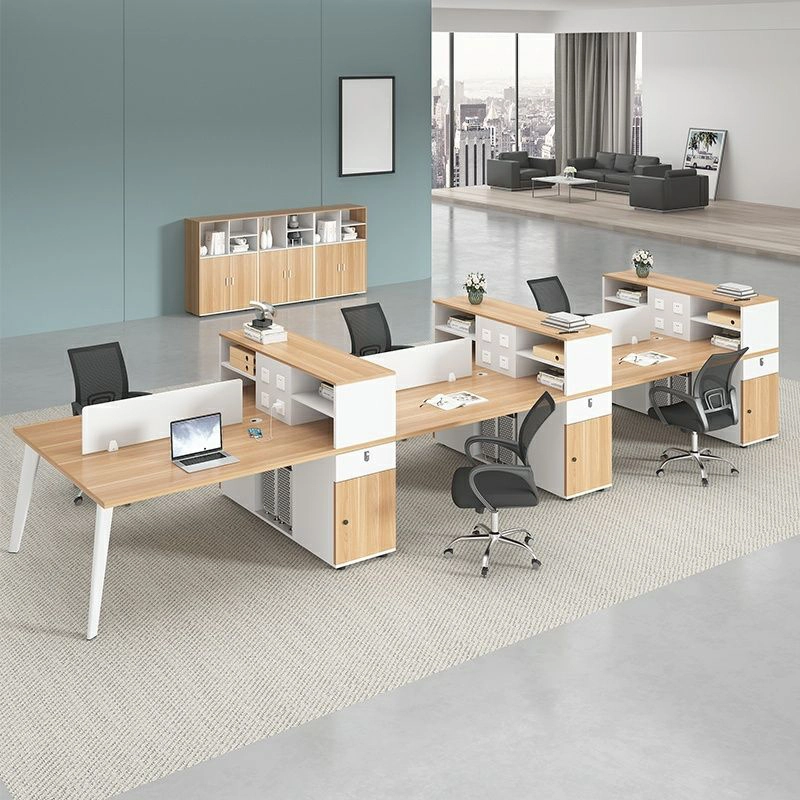
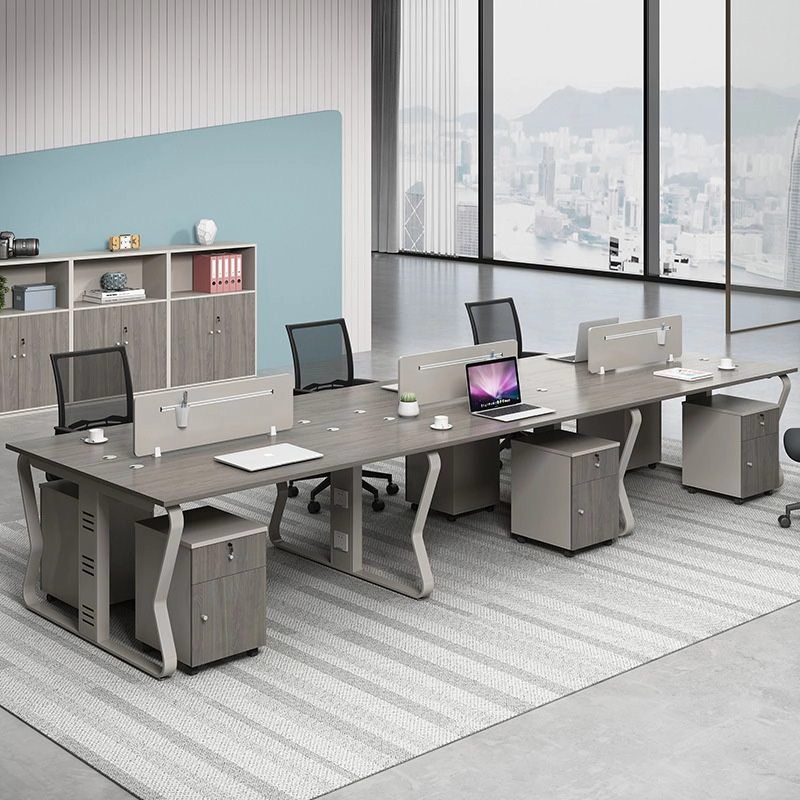
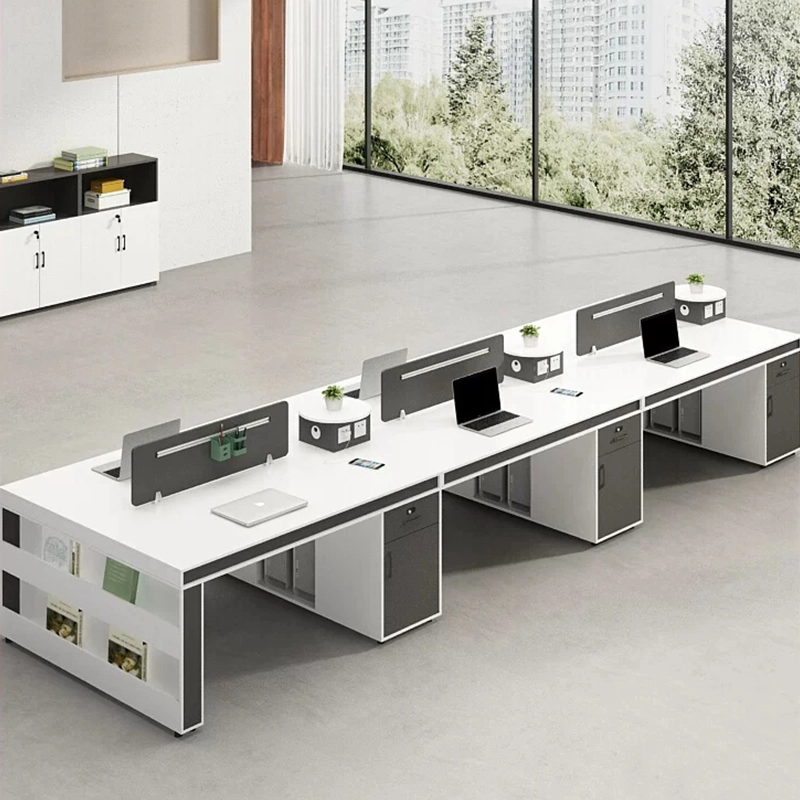
Bench workstations with mobile pedestals
-
Collaboration pods with privacy panels
-
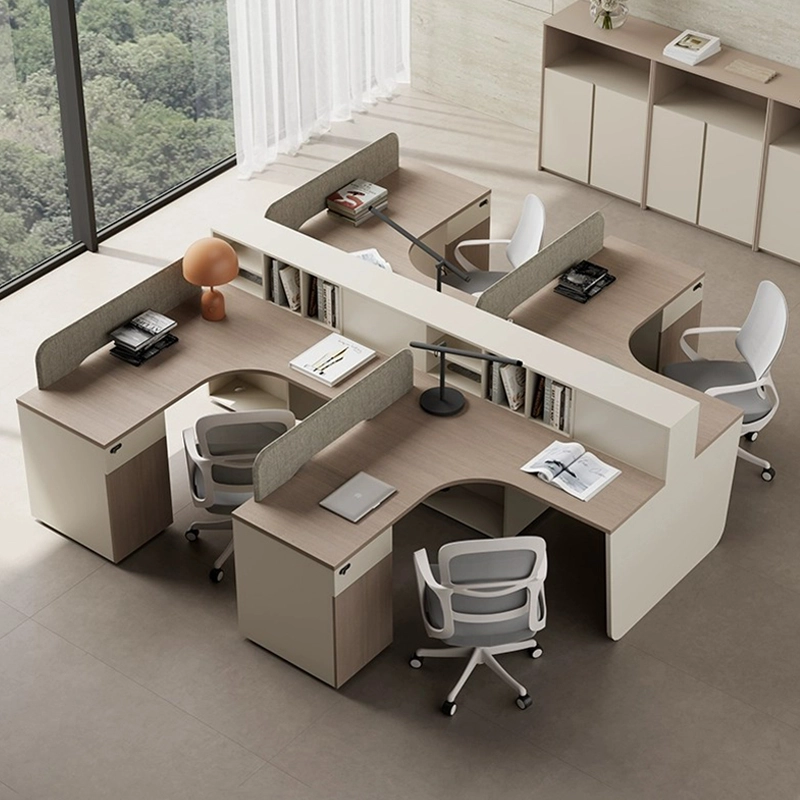
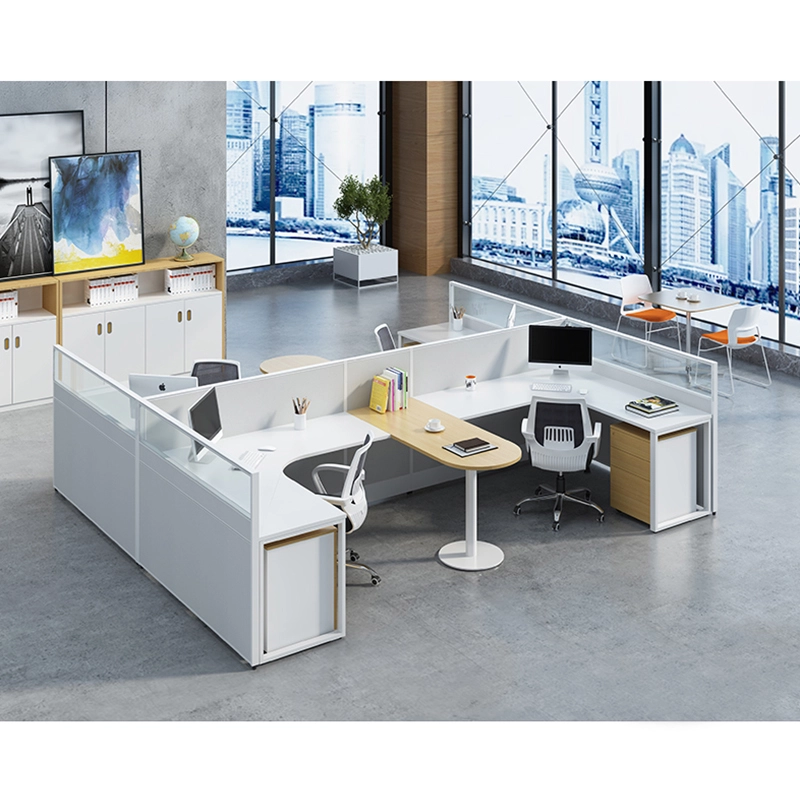
L-shaped or U-shaped modular clusters
These solutions enable smooth team communication while still providing personal work areas. Many offices now prioritize modularity to encourage interaction without compromising ergonomics.
4. Integration of Technology
Flexible modular furniture increasingly incorporates:
-
Built-in power outlets and USB charging
-
Cable management channels
-
Monitor arms and docking stations
-
Acoustic panels for focus areas
This integration allows rapid reconfiguration while keeping technology accessible and organized.
5. Sustainability and Eco-Friendly Materials
Modern trends emphasize sustainability:
-
Recyclable metals and plastics
-
FSC-certified wood panels
-
E1-grade low-emission boards
Modular furniture supports environmental goals by allowing long-term reuse and adaptation rather than frequent replacement.
6. Personalization and Branding
Companies are customizing modular furniture to reflect their brand and culture:
-
Color-coded partitions
-
Branded work surfaces
-
Custom finishes for reception areas and meeting pods
This trend improves employee engagement and reinforces organizational identity.
7. Ergonomic Adaptability
Employee wellness is a central focus:
-
3D-adjustable chairs
-
Height-adjustable desks
-
Modular storage at accessible heights
By combining ergonomics with modular design, offices can accommodate diverse workforce needs without permanent changes to layout.
8. Future-Proofing Office Spaces
The modular approach ensures offices remain agile:
-
Easy reconfiguration for team growth
-
Quick adaptation for hybrid work models
-
Supports technological upgrades without major renovation
This flexibility makes modular furniture a long-term investment for modern organizations.
Conclusion
Modular office furniture is redefining workspace efficiency, collaboration, and employee well-being. By integrating flexibility, technology, and ergonomic design, modular systems allow organizations to adapt to evolving work trends, hybrid models, and team growth without sacrificing aesthetics or functionality.
For forward-thinking companies, adopting modular solutions is no longer optional—it is essential for creating dynamic, resilient, and future-ready offices.
FAQ
1. What is modular office furniture?
Modular office furniture consists of reconfigurable desks, storage, and seating systems that can be adapted to changing workspace needs.
2. How does modular furniture support hybrid work?
It allows teams to adjust layouts, create focus areas, and provide collaboration zones based on fluctuating occupancy.
3. Are modular systems cost-effective?
Yes, because they reduce the need for frequent renovations and allow long-term reuse.
4. Can modular furniture be customized?
Most manufacturers offer custom finishes, colors, and configurations to match brand identity and office requirements.
5. Does modular furniture support ergonomic needs?
Yes, modern systems integrate height-adjustable desks, ergonomic chairs, and accessible storage options.
Latest Recommendations
Service
What's your products range?
1.Whether you need office furniture, home furniture, hotel furniture, school furniture.or special custom furniture products, we can meet your requirements.
2.-Products including office table, office chair, office filing cabinet, office workstation,Office sofa, office reception ,office conference room and so on, Simple Leisure Sets etc.
Can you handle small orders ?
Of course, in order to support clients' business, We also take small orders.
Why choose us?
A. Business Type: Furniture Manufacture,Production and export trade experience: Over 15 years Factory area:10000 + square meters Member:>100 staffs Design Team: Minimum 20 pax to organize
B.Customization: Welcome to OEM and ODM or Project.
C.Delivery:15days for 20GP, 25days for 40HQ.
D. Testing center is available in our factory, and regularly through national authoritative organization authoritative authentication, ensure that each product is qualified. E.Competitive price from factory directly.
ls there cheap shipping cost to import to our country?
For small order,express will be best. And for bulk order,sea ship way is best but take much time; For urgent orders,we suggest via air to airport plus our ship partner send to your door. When we calculate the freight for you, we will choose the cheapest,safest express company. lt is the freight company that asks us to pay, so we can not make it cheaper. lf you have your own agent in China, we can send the package to your agent.
Do you have any questions?
Contact one of our sales representatives or fill out this form.
MEI YI Furniture provides a one-stop service for the design, manufacturing, and customization of office, hotel, and school furniture.
Contact: Asya
Email: asya@myofficefurniture.com.cn
WhatsApp: +86 134 2216 1319
Address: No. 25, Nan Street, Jinpan, Zhongluotan Town, Baiyun District, Guangzhou, China.
Whatsapp: +8613422161319
Fackbook
Instagram
YouTube