




Curved vs. Rectangular Desks: Does Desk Shape Actually Affect Collaboration and Workflow?

Explore how curved and rectangular desk shapes influence collaboration, communication patterns, space efficiency, and workflow performance in modern office environments.
- Curved vs. Rectangular Desks: Does Desk Shape Actually Affect Collaboration and Workflow?
- 1. Spatial Geometry and Human Interaction
- Rectangular Desks
- Curved Desks
- 2. Impact on Collaboration
- Rectangular Layouts: Structured Collaboration
- Curved Layouts: Organic Interaction
- 3. Workflow Efficiency
- For Individual Focus
- For Dynamic Team Environments
- 4. Space Planning Considerations
- 5. Ergonomics and User Comfort
- 6. Aesthetic and Brand Expression
- 7. Hybrid Approach: The Most Practical Strategy
- Strategic Conclusion
- FAQ
Curved vs. Rectangular Desks: Does Desk Shape Actually Affect Collaboration and Workflow?
Desk shape is not merely an aesthetic decision—it directly impacts spatial dynamics, communication flow, and operational efficiency. In workplace design, geometry influences how people interact, move, and perform tasks.
Understanding the functional differences between curved and rectangular desks enables better planning for executive offices, collaborative teams, and open-plan workstations.
1. Spatial Geometry and Human Interaction
Rectangular Desks
Traditional rectangular desks create linear boundaries. They:
-
Establish clear territorial zones
-
Support structured, task-focused work
-
Align easily into grid-based layouts
Rectangular configurations are widely used in executive suites and departmental offices where hierarchy and order are emphasized.
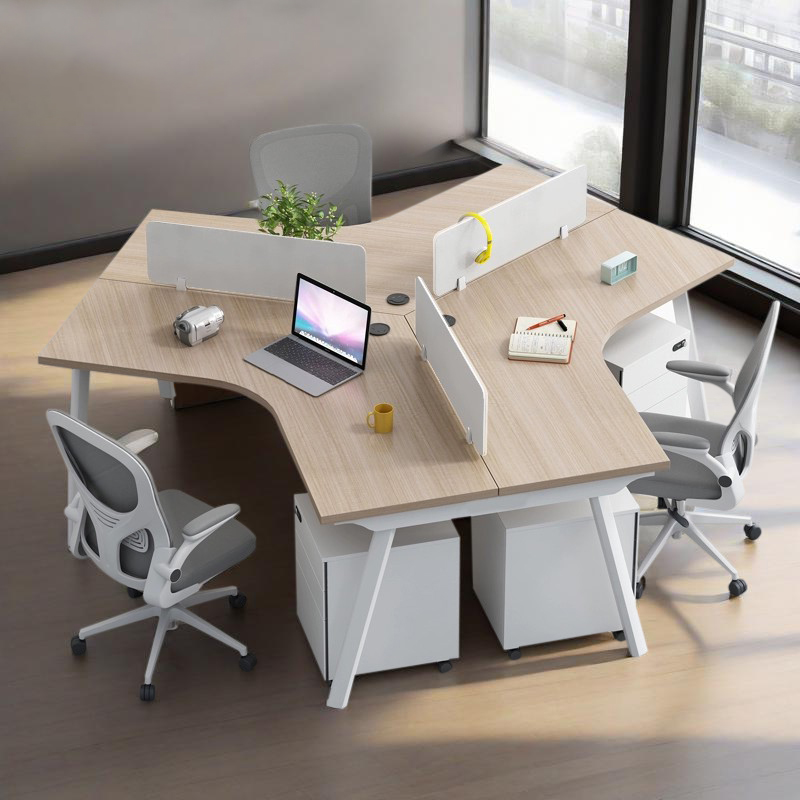
Curved Desks
Curved desks soften edges and create a more fluid visual language. They:
-
Reduce perceived barriers between users
-
Encourage face-to-face interaction
-
Improve reach radius within the workstation
The absence of sharp angles fosters a more conversational environment, especially in collaborative settings.
2. Impact on Collaboration
Rectangular Layouts: Structured Collaboration
Rectangular desks arranged in clusters or bench systems allow:
-
Clear seating alignment
-
Predictable sightlines
-
Efficient cable management in straight channels
However, sharp corners can create subtle psychological separation between team members.
Curved Layouts: Organic Interaction
Curved configurations naturally guide users inward, promoting:
-
Increased eye contact
-
Faster spontaneous communication
-
Reduced “corner isolation”
This makes curved desks particularly effective in creative departments and project-based teams.
3. Workflow Efficiency
Workflow efficiency depends on task type.
For Individual Focus
Rectangular desks:
-
Provide defined working edges
-
Support dual-monitor alignment
-
Maximize usable surface area
They are ideal for analytical, finance, and administrative roles requiring precision and structured organization.
For Dynamic Team Environments
Curved desks:
-
Improve reach across shared materials
-
Facilitate multi-user collaboration
-
Enhance movement flow around pods
Curved modular systems are often integrated into open-plan offices and innovation hubs.
4. Space Planning Considerations
Rectangular desks optimize:
-
Wall placement
-
Grid-based floor planning
-
High-density workstation arrangements
Curved desks optimize:
-
Centralized pod formations
-
Flexible layouts
-
Visual openness in large areas
In large-scale environments such as corporate headquarters and coworking spaces, designers often combine both shapes to balance efficiency and collaboration.
5. Ergonomics and User Comfort
Curved desks can enhance ergonomic reach by:
-
Bringing peripheral items closer
-
Supporting natural arm movement arcs
Rectangular desks, meanwhile, provide:
-
Clear edge references
-
Consistent depth for monitor positioning
The ergonomic advantage depends more on proportions than shape alone.
6. Aesthetic and Brand Expression
Desk geometry communicates brand identity.
-
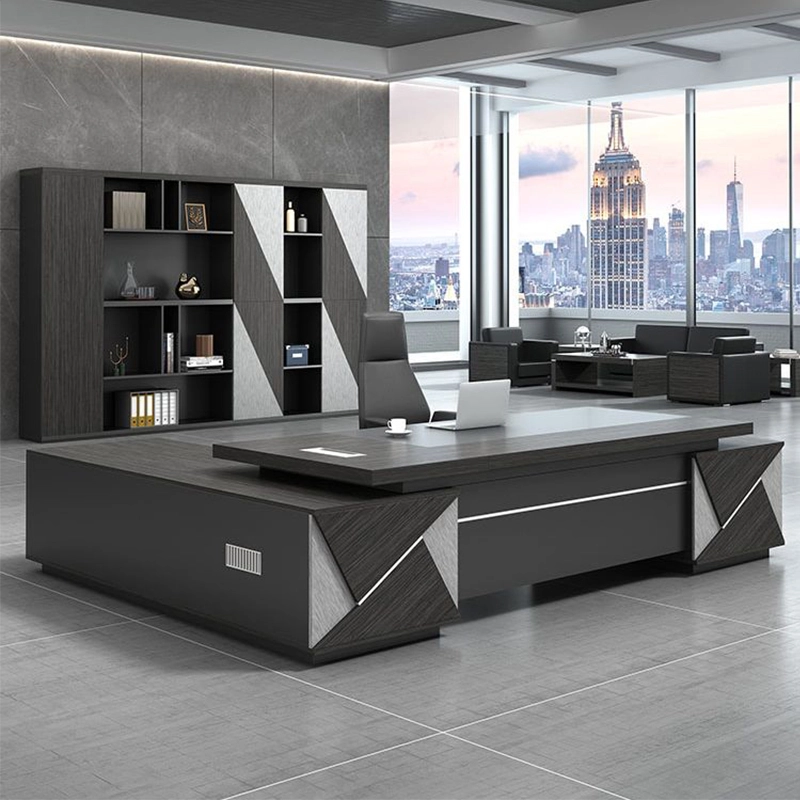
Rectangular desks project stability, authority, and structure.
-
Curved desks convey innovation, openness, and modernity.
Contemporary design movements influenced by firms like Gensler and HOK frequently integrate soft geometries to humanize large office environments.
7. Hybrid Approach: The Most Practical Strategy
Many modern workplaces integrate:
-
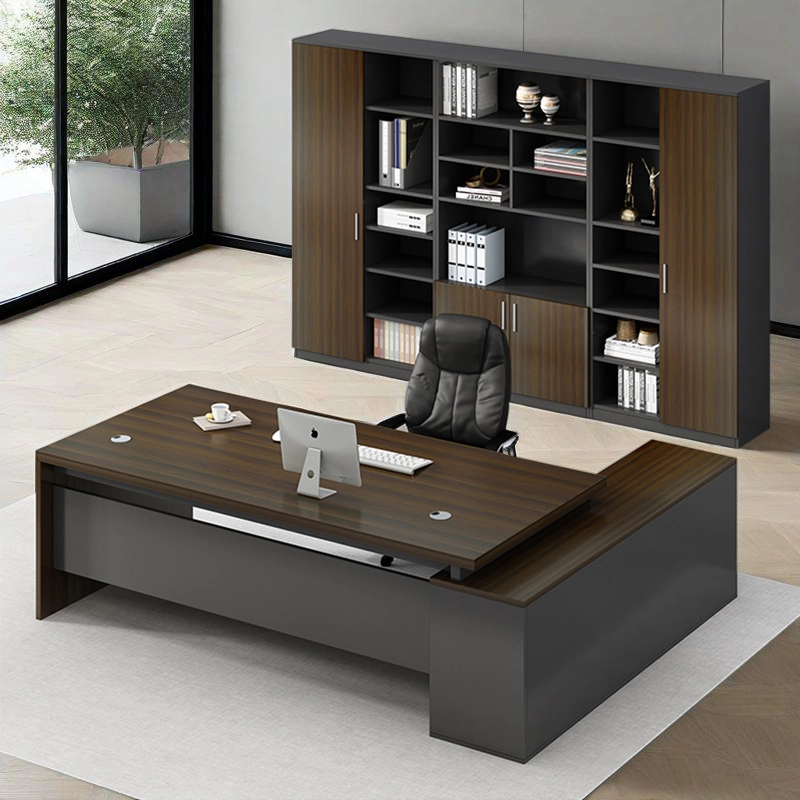
Rectangular executive desks
-
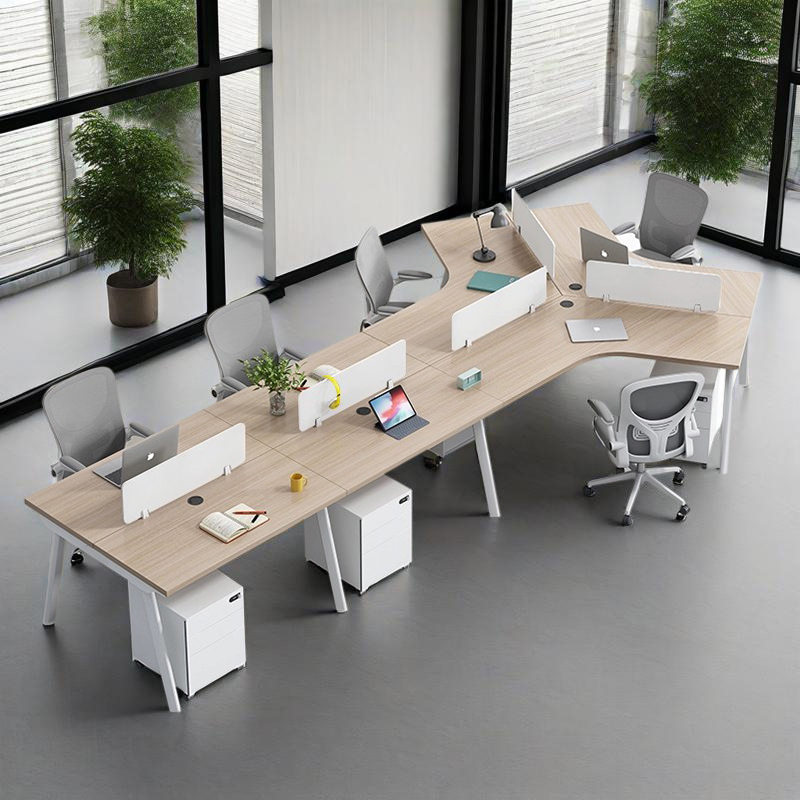
Curved collaborative pods
-
Mixed-form modular bench systems
This hybrid strategy aligns desk geometry with task typology rather than enforcing a single design language across the entire office.
Strategic Conclusion
Desk shape does influence collaboration and workflow—but it does so contextually.
-
Rectangular desks enhance structure, density, and individual productivity.
-
Curved desks improve interaction, fluidity, and collaborative energy.
The optimal choice depends on:
-
Nature of work
-
Team size
-
Space constraints
-
Brand positioning
-
Desired communication dynamics
Rather than asking which shape is better, the more strategic question is: Which shape supports the specific workflow objectives of your organization?
FAQ
1. Are curved desks more collaborative?
Yes, they typically encourage face-to-face interaction and reduce psychological barriers.
2. Do rectangular desks save more space?
In grid-based layouts, rectangular desks usually achieve higher spatial efficiency.
3. Are curved desks harder to arrange?
They require more intentional planning but offer stronger visual and interaction benefits.
4. Which desk shape is better for executives?
Rectangular desks remain the standard for executive offices due to their structured presence.
5. Can both shapes be used together?
Yes. Hybrid layouts often deliver the best balance of efficiency and collaboration.
Latest Recommendations

Service
What's your products range?
1.Whether you need office furniture, home furniture, hotel furniture, school furniture.or special custom furniture products, we can meet your requirements.
2.-Products including office table, office chair, office filing cabinet, office workstation,Office sofa, office reception ,office conference room and so on, Simple Leisure Sets etc.
Why choose us?
A. Business Type: Furniture Manufacture,Production and export trade experience: Over 15 years Factory area:10000 + square meters Member:>100 staffs Design Team: Minimum 20 pax to organize
B.Customization: Welcome to OEM and ODM or Project.
C.Delivery:15days for 20GP, 25days for 40HQ.
D. Testing center is available in our factory, and regularly through national authoritative organization authoritative authentication, ensure that each product is qualified. E.Competitive price from factory directly.
Can you handle small orders ?
Of course, in order to support clients' business, We also take small orders.
ls there cheap shipping cost to import to our country?
For small order,express will be best. And for bulk order,sea ship way is best but take much time; For urgent orders,we suggest via air to airport plus our ship partner send to your door. When we calculate the freight for you, we will choose the cheapest,safest express company. lt is the freight company that asks us to pay, so we can not make it cheaper. lf you have your own agent in China, we can send the package to your agent.
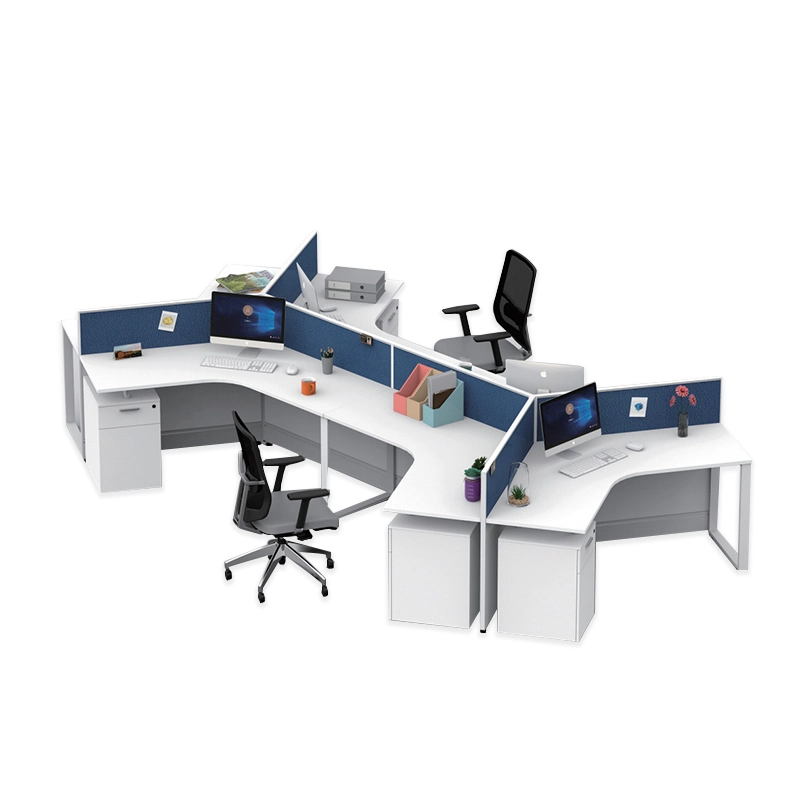
workstation, small office partition White and dark green environmentally friendly materials, sound-absorbing design. Modular splicing supports H/L-type free combination.
Specifications: 1200*1100*1200mm.
Screen frame: 30 mm white electrostatic sprayed aluminum, wall thickness 1.2 mm, column 1.5 mm, can be freely combined.
Material: High-quality environmentally friendly E0 grade particle board is used as the base material, with a thickness of 25 mm, PVC edge sealing on all four sides, and a melamine finish, and it does not contain chemical components harmful to the human body.
Hardware accessories: All accessories are rust-proof and anti-corrosion treated (color optional).
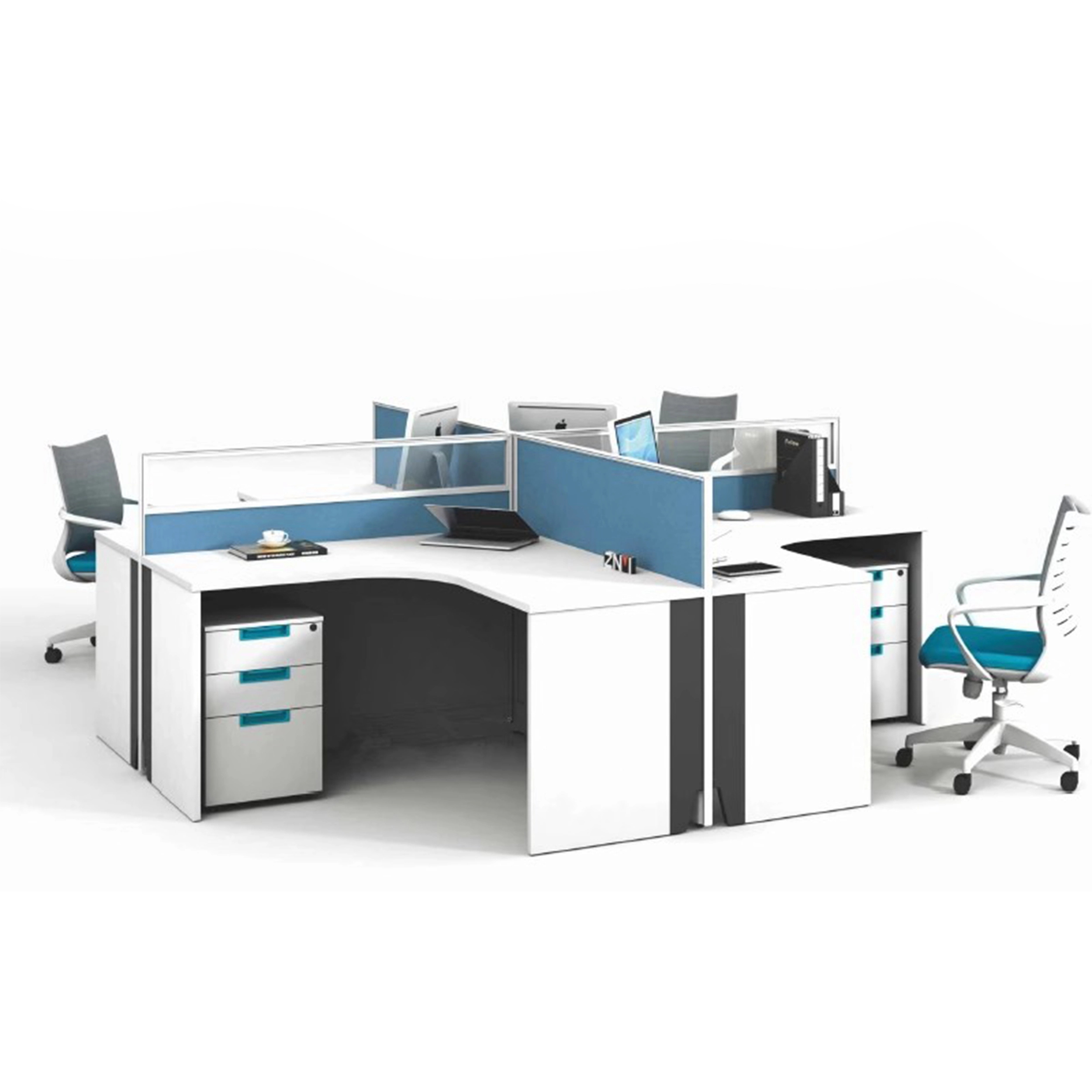
workstation, small office partition White and dark green environmentally friendly materials, sound-absorbing design. Modular splicing supports H/L-type free combination.
Specifications: 1200×1200×1100mm.
Screen frame: 30 mm white electrostatic sprayed aluminum, wall thickness 1.2 mm, column 1.5 mm, can be freely combined.
Material: High-quality environmentally friendly E0 grade particle board is used as the base material, with a thickness of 25 mm, PVC edge sealing on all four sides, and a melamine finish, and it does not contain chemical components harmful to the human body.
Hardware accessories: All accessories are rust-proof and anti-corrosion treated (color optional).
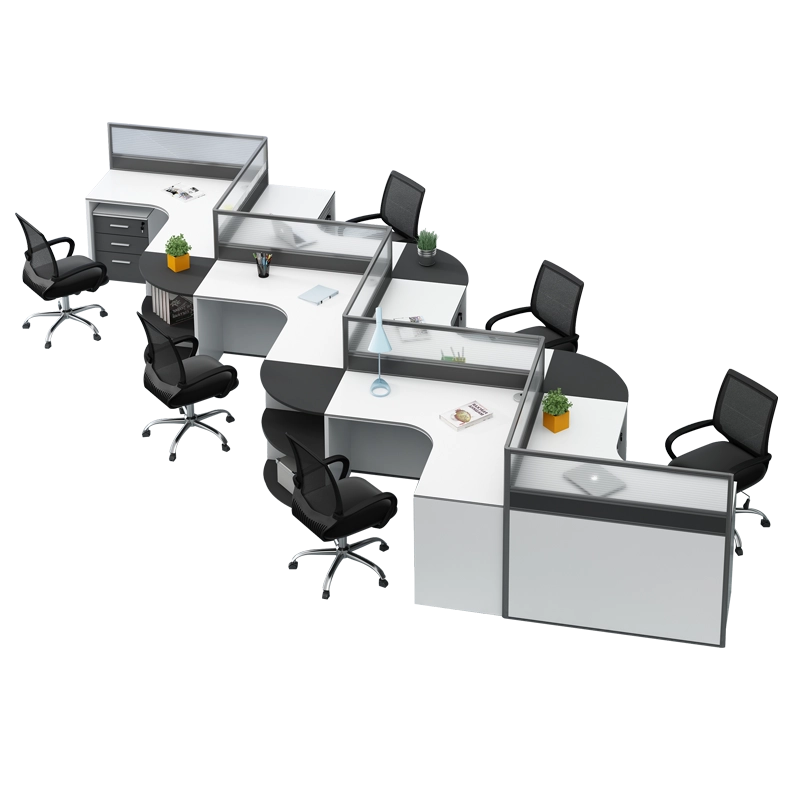
workstation, small office partition White and dark green environmentally friendly materials, sound-absorbing design. Modular splicing supports H/L-type free combination.
Specifications: 1200*1100*1200mm.
Screen frame: 30 mm white electrostatic sprayed aluminum, wall thickness 1.2 mm, column 1.5 mm, can be freely combined.
Material: High-quality environmentally friendly E0 grade particle board is used as the base material, with a thickness of 25 mm, PVC edge sealing on all four sides, and a melamine finish, and it does not contain chemical components harmful to the human body.
Hardware accessories: All accessories are rust-proof and anti-corrosion treated (color optional).
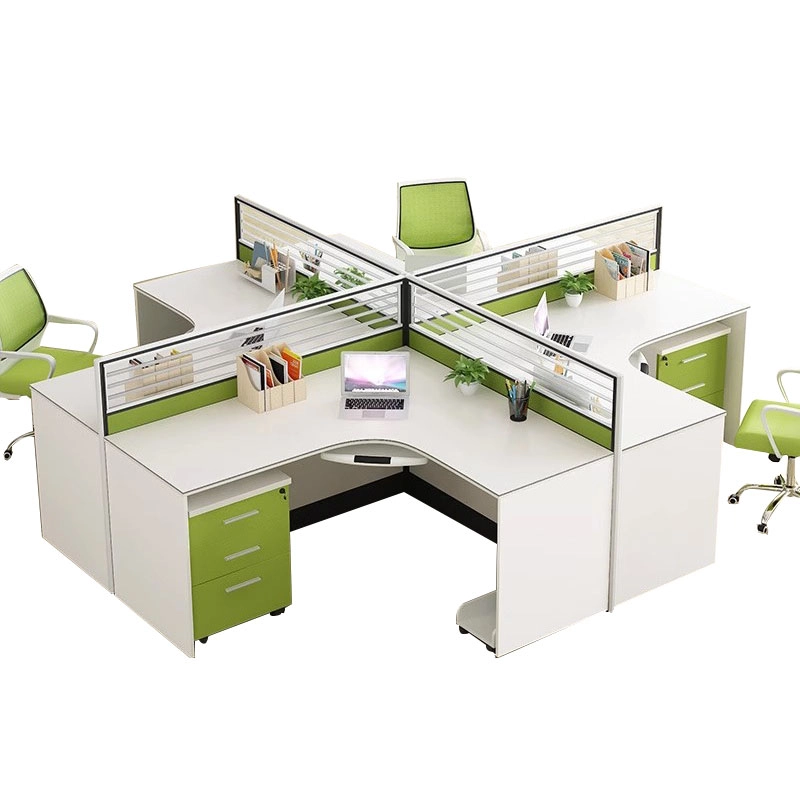
workstation, small office partition White and dark green environmentally friendly materials, sound-absorbing design. Modular splicing supports H/L-type free combination.
Specifications: 1200×1200×1100mm.
Screen frame: 30 mm white electrostatic sprayed aluminum, wall thickness 1.2 mm, column 1.5 mm, can be freely combined.
Material: High-quality environmentally friendly E0 grade particle board is used as the base material, with a thickness of 25 mm, PVC edge sealing on all four sides, and a melamine finish, and it does not contain chemical components harmful to the human body.
Hardware accessories: All accessories are rust-proof and anti-corrosion treated (color optional).
Do you have any questions?
Contact one of our sales representatives or fill out this form.
MEI YI Furniture provides a one-stop service for the design, manufacturing, and customization of office, hotel, and school furniture.
Contact: Asya
Email: asya@myofficefurniture.com.cn
WhatsApp: +86 134 2216 1319
Address: No. 25, Nan Street, Jinpan, Zhongluotan Town, Baiyun District, Guangzhou, China.
Whatsapp: +8613422161319
Fackbook
Instagram
YouTube