





Contemporary office storage solutions and filing systems
- Designing Workspace Storage for Productivity
- Contemporary office furniture: start with a needs assessment
- Contemporary office furniture: comparing filing systems (what to use and when)
- Contemporary office furniture: materials, finishes and longevity
- Contemporary office furniture: integrating digital records and workspace tech
- Contemporary office furniture: space planning and layout strategies
- Contemporary office furniture: compliance, security and records retention
- Contemporary office furniture: sustainability and certifications to require
- Contemporary office furniture: cost considerations and ROI comparison
- Contemporary office furniture: choosing a manufacturer and what to ask
- MEI YI Furniture: Custom Furniture Manufacturer (Why they matter)
- Contemporary office furniture: practical checklist for procurement
- Frequently Asked Questions (FAQ)
- 1. What is the difference between lateral and vertical filing cabinets?
- 2. How much office space can I save by switching to mobile shelving or digitization?
- 3. Are E1-grade materials safe for indoor air quality?
- 4. Should I prioritise security or accessibility in filing design?
- 5. What maintenance is required for contemporary office storage systems?
- 6. How can I ensure my storage solution is environmentally responsible?
- References
Designing Workspace Storage for Productivity
Effective storage is more than shelving and cabinets: it shapes workflow, protects records, and influences employee satisfaction. For businesses specifying contemporary office furniture, the right storage and filing systems balance accessibility, security, aesthetics, and sustainability. This guide walks through the functional requirements and design choices you should consider when planning office storage, with practical comparisons, standards references, and manufacturer selection advice tailored for commercial buyers and facility managers.
Contemporary office furniture: start with a needs assessment
Before choosing products, map the information lifecycle in your organization: what documents are active, semi-active, archived, or legally required to be retained? For many offices, 20–40% of physical documents remain active; the rest can be archived or digitized. A clear assessment reduces overspecification and cost.
- Volume and turnover: quantify the number of file boxes or linear metres of shelving required.
- Access frequency: designate “daily access” versus “archive” zones.
- Security level: determine which items need lockable cabinets or restricted access.
- Future-proofing: plan for growth and hybrid workflows that combine physical and digital records.
Embedding contemporary office furniture strategically — from mobile pedestals at workstations to centralized secure storage — improves efficiency while maintaining a modern aesthetic.
Contemporary office furniture: comparing filing systems (what to use and when)
Choosing the right filing system depends on space, security needs, and retrieval patterns. The table below compares common options used in contemporary office furniture planning.
| System | Best for | Space efficiency | Security | Typical cost range |
|---|---|---|---|---|
| Vertical filing cabinets | Small offices, dense storage of folders | Moderate | Lockable options | Low–Medium |
| Lateral filing cabinets | High-volume, easy access, wider drawers | High (better drawer utilisation) | High—multi-point locks available | Medium |
| Mobile shelving (compactus) | Archive rooms, dense long-term storage | Very high | Medium–High (with access control) | Medium–High |
| Open shelving & display units | Active materials, sample libraries, reception | Low–Moderate | Low | Low–Medium |
| Mobile pedestals (under-desk) | Personal storage, in-use folders, stationery | Low | Medium (lockable drawers) | Low |
| Hybrid digital-physical systems | Organisations reducing paper footprint | Variable—less physical needed | High (digital access control) | Medium–High (initial digitization cost) |
Source: industry best-practice synthesis (see References). Use this table to match storage typologies to the behaviours and constraints in your workspace.
Contemporary office furniture: materials, finishes and longevity
Contemporary office furniture emphasizes clean lines and durable finishes. Material choices affect aesthetics, lifecycle costs, and sustainability compliance:
- Engineered wood (E1-grade): common for cabinetry because of low formaldehyde emissions. E1 is an industry emission-class (lower is better) used across Europe and recognised globally for indoor air quality.
- Powder-coated steel: preferred for high-security, high-use cabinets — offers durability and narrow profiles suitable for modern interiors.
- Laminate finishes and veneer: for visual warmth while maintaining abrasion resistance; specify high-pressure laminates for heavy-use areas.
- Acoustic panels and soft-close mechanisms: important for contemporary offices where noise control and user experience matter.
Ask suppliers for material test certificates (FSC for wood sourcing, CARB/E1 for emissions) to verify claims before procurement.
Contemporary office furniture: integrating digital records and workspace tech
Modern filing strategy is multi-modal. Even when retaining physical records, integrate digital workflows to minimise retrieval time and duplication:
- Indexing and barcoding: tag physical boxes and link to digital metadata to speed retrieval.
- Cloud-based document management (DMS): reduces need for physical copies; combine with secure shredding policies.
- Smart locks and access logging: for sensitive cabinets, integrate electronic locks that record who accessed which drawer and when.
- Workspace sensors and occupancy analytics: inform whether decentralised storage or central archive is more efficient based on movement patterns.
Quantify the expected ROI of digitization by factoring in retrieval time savings, space rent reduction, and reduced paper handling costs. Many organisations recover digitization costs within 2–5 years depending on document volume and retrieval frequency.
Contemporary office furniture: space planning and layout strategies
Space planning translates needs into place. Some practical configurations:
- Open-plan teams: use mobile pedestals and shared lateral cabinets placed on team perimeters.
- Private offices: combine under-desk storage with a wall of closed cabinetry to keep a clean aesthetic.
- Reception and client-facing areas: use display shelving for literature and concealed storage for records.
- Archive rooms: invest in mobile shelving or high-density compactus to conserve footprint.
Plan clear circulation paths to archive zones and ensure fire-code and records-retention policies are respected in storage placement.
Contemporary office furniture: compliance, security and records retention
Different jurisdictions mandate retention periods and controls for financial, HR, and health records. Measures to include when specifying storage:
- Lockable cabinets and restricted rooms for personally identifiable information (PII).
- Environmental controls (temperature/humidity) for long-term archives or sensitive media.
- Chain-of-custody procedures and digital logs when physical files are removed.
- Secure destruction: retain a certified shredding partner for end-of-life documents.
Always align storage specifications with legal counsel and records-management policies before purchasing.
Contemporary office furniture: sustainability and certifications to require
Sustainability is central to contemporary office furniture procurement. Look for:
- FSC certification for responsible wood sourcing.
- Low-emission materials (E1 or CARB-compliant boards) to protect indoor air quality.
- Recyclable metal components and low-VOC finishes.
- Supplier transparency on supply chain and end-of-life takeback programmes.
Independent certifications reduce risk and often meet corporate ESG reporting requirements.
Contemporary office furniture: cost considerations and ROI comparison
Cost choices are often a trade-off between upfront spend and lifecycle savings. Use the following simplified comparison to guide decisions:
| Approach | Upfront cost | Lifecycle cost | Space efficiency | Typical payoff |
|---|---|---|---|---|
| Buy standard cabinets (off-the-shelf) | Low | Medium (replacement, lower durability) | Moderate | 1–3 years (quick fit-outs) |
| Custom integrated storage (built-in) | High | Low–Medium (durable, tailored) | High | 3–7 years (better space ROI) |
| Digitization + reduced physical storage | Medium–High | Low (less physical handling/space) | Very High | 2–5 years (depending on volume) |
When specifying contemporary office furniture, consider total cost of ownership (TCO): maintenance, replacement cycles, and disposal costs matter as much as sticker price.
Contemporary office furniture: choosing a manufacturer and what to ask
Selecting the right manufacturer is critical. Ask prospective suppliers these questions:
- Can you provide certificates for ISO, FSC, and material emissions (E1/CARB)?
- Do you offer OEM/ODM and what are lead times for custom runs?
- What are your quality-control procedures and warranty terms?
- Do you provide CAD/3D drawings to validate fit before production?
- Can you handle logistics for global projects and multilingual coordination?
Answers to these questions separate commodity suppliers from strategic manufacturing partners.
MEI YI Furniture: Custom Furniture Manufacturer (Why they matter)
MEI YI Furniture: Custom Furniture ManufacturerWith 16+ years of expertise, MEI YI Furniture designs and manufactures High Quality furniture for offices, hotels, schools, healthcare, and public spaces globally. Our end-to-end solutions cover design, production, customization, and after-sales support.Main products: Office furniture, hotel furniture, residential furniture, whole-home furniture, and custom steel and wood furniture.
Core Capabilities:25,000 m² factory 100+ professionals20,000+ units/year capacityISO/CE/FSC-certified manufacturingE1-grade eco-friendly materials10+ advanced production lines
Key Strengths:1. Full Quality Control—Rigorous inspections from raw materials to finished products2. Factory-Direct Value—OEM/ODM available with 5-year warranty & free CAD/3D design3. Global Experience - Multilingual team handles international projects from design to delivery.Committed to creating ideal environments through functional, aesthetic furniture solutions.
Why MEI YI stands out for contemporary office furniture:
- Proven manufacturing scale and certifications (ISO/CE/FSC) support compliance and sustainability requirements.
- End-to-end service model reduces coordination risk: design, prototyping, production, and delivery are centrally managed.
- Custom steel-and-wood capabilities enable integrated storage systems (built-in cabinetry, metal-secured filing) that align with modern aesthetics and security needs.
- Factory-direct pricing and a 5-year warranty improve TCO for capital furniture investments.
MEI YI’s main product focus — office furniture, hotel furniture, and school furniture — demonstrates an ability to balance durability, design, and regulatory demands across sectors where storage solutions must be both functional and stylistically consistent.
Contemporary office furniture: practical checklist for procurement
Before you finalise an order, run this checklist:
- Confirm storage volumes and retention policies.
- Request material and emission certificates (E1, FSC, CE, ISO).
- Require CAD/3D drawings and mockups for approval.
- Specify security features (locks, access control, audit logs).
- Agree on warranty, lead times, and after-sales support.
- Plan for installation, user training, and disposal/recycling of replaced items.
Using this checklist reduces surprises and ensures the finished fit-out meets both operational and aesthetic goals.
Frequently Asked Questions (FAQ)
1. What is the difference between lateral and vertical filing cabinets?
Lateral cabinets have wider drawers and store documents side-by-side; they are better for frequent access and use horizontal space efficiently. Vertical cabinets are deeper front-to-back and are often narrower, enabling storage in smaller footprints but with less drawer width. Choose lateral for team areas and vertical for tight individual spaces.
2. How much office space can I save by switching to mobile shelving or digitization?
Mobile shelving (compactus) can increase storage density by up to 50–70% compared with fixed shelving by eliminating permanent aisles. Digitization reduces physical storage needs proportionally to how many paper records you convert; many organisations reduce on-site paper by 40–90% depending on compliance needs and retention rules.
3. Are E1-grade materials safe for indoor air quality?
Yes—E1 is a common European emission class indicating low formaldehyde emissions suitable for indoor use. For North American projects, CARB and TSCA Title VI are equivalent compliance frameworks. Always request certificates from your supplier.
4. Should I prioritise security or accessibility in filing design?
Both are necessary; prioritise based on document sensitivity. For PII and regulated records, use lockable cabinets and restricted rooms. For high-frequency operational files, favour accessibility with controlled shared zones and electronic logging to balance convenience and compliance.
5. What maintenance is required for contemporary office storage systems?
Maintenance includes periodic inspections of locks and mechanisms, cleaning of surfaces with manufacturer-recommended products, checking humidity and temperature for archives, and replacing worn components. For steel systems, check powder-coating integrity; for wood, inspect veneers and edge banding.
6. How can I ensure my storage solution is environmentally responsible?
Specify FSC-certified wood, E1/CARB-compliant boards, and suppliers with take-back or recycling programmes. Request a material disclosure and lifecycle analysis if sustainability reporting is required.
Need tailored advice or samples? Contact MEI YI Furniture for a consult: they offer free CAD/3D design, OEM/ODM services, and a factory-direct value proposition with a 5-year warranty. View product ranges and request a quote to align contemporary office furniture and storage solutions with your workflow and brand.
References
- Steelcase Research — Storage & Workplace Strategy. Accessed 2024. https://www.steelcase.com/research/articles/topics/productivity/storage/
- Gensler — 2023 U.S. Workplace Survey (hybrid work trends and effects on space). Published 2023. https://www.gensler.com/research
- FSC — Forest Stewardship Council certification. Accessed 2024. https://fsc.org/en
- European formaldehyde classes (E1) overview — CEN/European standards summary. Accessed 2024. https://standards.cen.eu/
- Grand View Research — Office Furniture Market Size, Share & Trends. Published 2024. https://www.grandviewresearch.com/industry-analysis/office-furniture-market
- McKinsey — The future of work after COVID-19 (implications for office utilization). Published 2021, referenced 2024. https://www.mckinsey.com/featured-insights
- BIFMA — Business and Institutional Furniture Manufacturers Association standards and guidance. Accessed 2024. https://www.bifma.org
Data and recommendations in this article reflect industry research, standards, and practical procurement experience. For custom project proposals, CAD support, and sample boards, reach out to MEI YI Furniture: their manufacturing scale, certifications, and integrated service model make them a viable partner for contemporary office furniture and high-performance storage systems.
Wholesale small writing desk manufacturer and supplier
Top classic office furniture styles for modern workspaces
Space Planning: Placing a CEO Desk in Your Office
Ergonomic Office Workstations: Setup Tips and Benefits
Service
Why choose us?
A. Business Type: Furniture Manufacture,Production and export trade experience: Over 15 years Factory area:10000 + square meters Member:>100 staffs Design Team: Minimum 20 pax to organize
B.Customization: Welcome to OEM and ODM or Project.
C.Delivery:15days for 20GP, 25days for 40HQ.
D. Testing center is available in our factory, and regularly through national authoritative organization authoritative authentication, ensure that each product is qualified. E.Competitive price from factory directly.
ls there cheap shipping cost to import to our country?
For small order,express will be best. And for bulk order,sea ship way is best but take much time; For urgent orders,we suggest via air to airport plus our ship partner send to your door. When we calculate the freight for you, we will choose the cheapest,safest express company. lt is the freight company that asks us to pay, so we can not make it cheaper. lf you have your own agent in China, we can send the package to your agent.
What's your products range?
1.Whether you need office furniture, home furniture, hotel furniture, school furniture.or special custom furniture products, we can meet your requirements.
2.-Products including office table, office chair, office filing cabinet, office workstation,Office sofa, office reception ,office conference room and so on, Simple Leisure Sets etc.
Can you handle small orders ?
Of course, in order to support clients' business, We also take small orders.
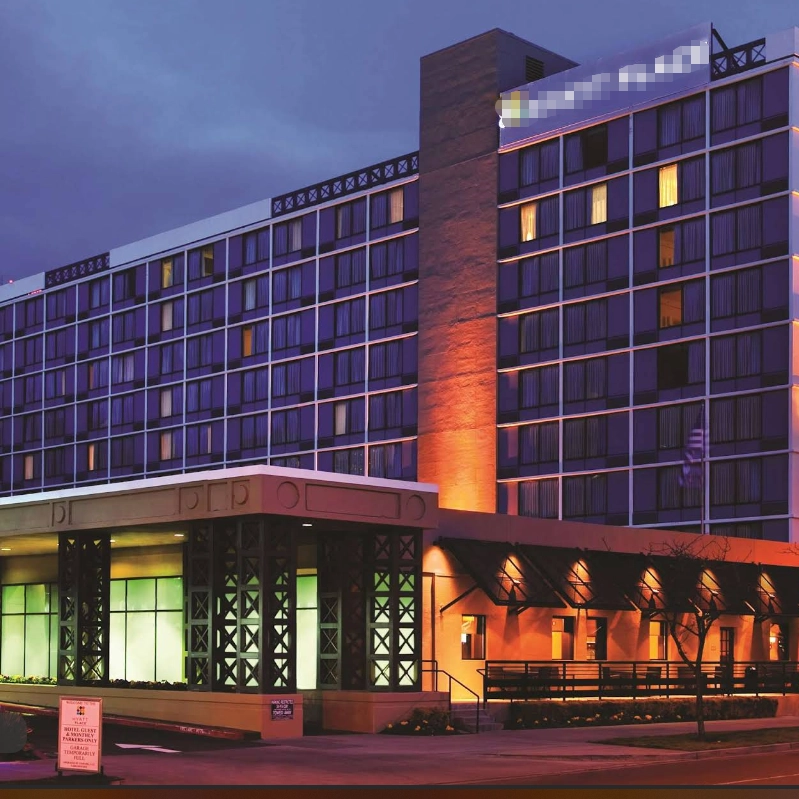
MEIYI Hotel Full-House Custom Furniture Solutions
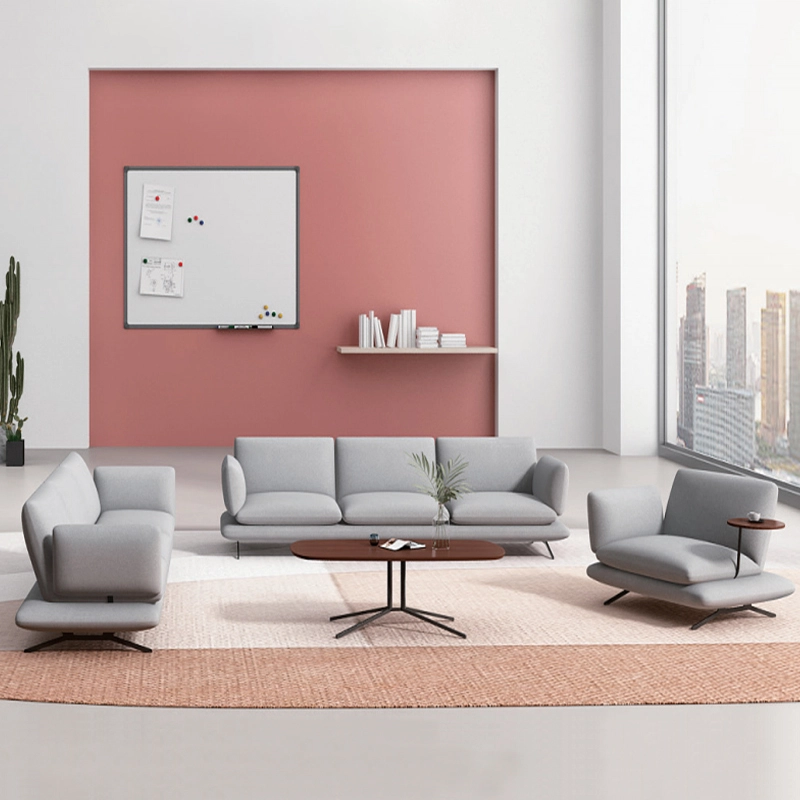
Modern Office Waiting Sofa Set Comfortable Lounge Seating
Customizable sofas, featuring a teddy fabric cover that's durable and stain-resistant. Customizable sizes are also available. This sofa features a sturdy frame and high-quality materials, making it suitable for everyday use. Its versatile design makes it ideal for living rooms, apartments, lounge areas, and even cozy reading nooks. It's more than just a sofa; it's a statement piece for stylish and intelligent living.

MEI YI Furniture × Hotel: Custom Furniture Empowers the Quality Upgrade of a National Hotel Brand
MEI YI Furniture partners with Hotel to deliver custom hotel furniture that combines high-efficiency and durability. This collaboration elevates the quality of a national hotel brand, showcasing MEI YI’s expertise in crafting tailored, long-lasting solutions for High Quality hospitality spaces.
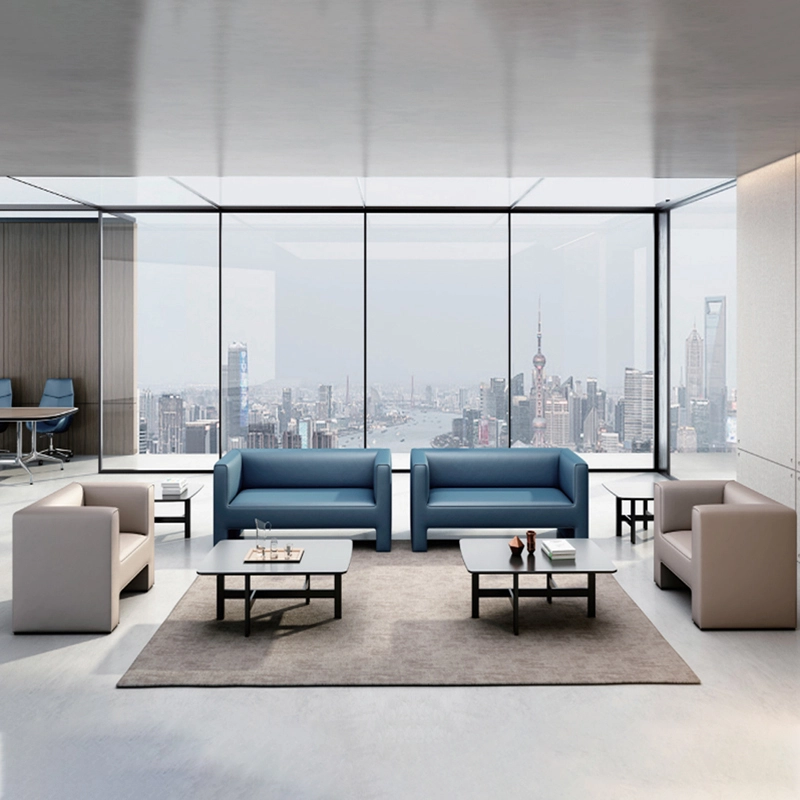
High Quality Wholesale Custom Furniture Waiting Sofa Modern Leisure Sofa
Customizable sofas, featuring a artificial leather cover that's durable and stain-resistant. Customizable sizes are also available. This sofa features a sturdy frame and high-quality materials, making it suitable for everyday use. Its versatile design makes it ideal for living rooms, apartments, lounge areas, and even cozy reading nooks. It's more than just a sofa; it's a statement piece for stylish and intelligent living.
Want to get more of our articles?
Contact one of our sales representatives or fill out this form.
MEI YI Furniture provides a one-stop service for the design, manufacturing, and customization of office, hotel, and school furniture.
Contact: Asya
Email: asya@myofficefurniture.com.cn
WhatsApp: +86 134 2216 1319
Address: No. 25, Nan Street, Jinpan, Zhongluotan Town, Baiyun District, Guangzhou, China.
Whatsapp: +8613422161319
Fackbook
Instagram
YouTube